
AI tools like ChatGPT, Perplexity, and Gemini have made some marketing tasks easier for a business owner trying to DIY their strategy. Content writing and graphic creation which previously was time consuming and an undesirable task can now be accomplished in minutes with the right prompt engineering. Recently, the cases of business owners and marketing professionals using these AI tools for SEO website audits have increased substantially. However, the results are misleading and not enough to make informed decisions.
In this blog we will discuss perplexity audits and how business owners should approach implementing them into their company’s marketing strategy.
What is a Website Audit?
Website audits require live crawling, technical verification, page-by-page context, analytics and search console data, and a real interpretation of business goals. Common website auditing tools used by marketing professionals include SE Ranking, Hubspot, Ahrefs, and Moz among others.
Why is a Website Audit Important?
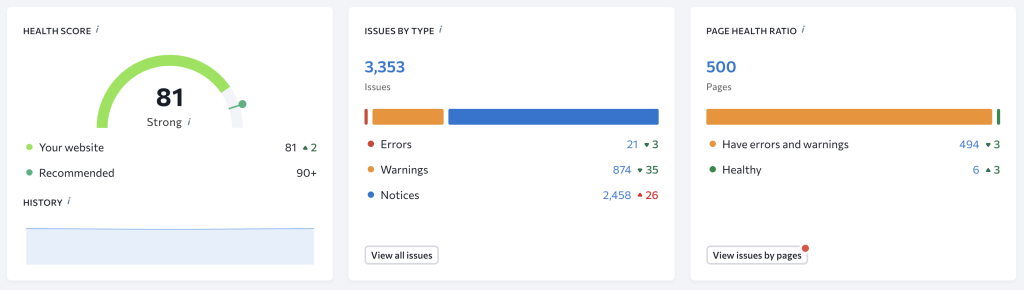
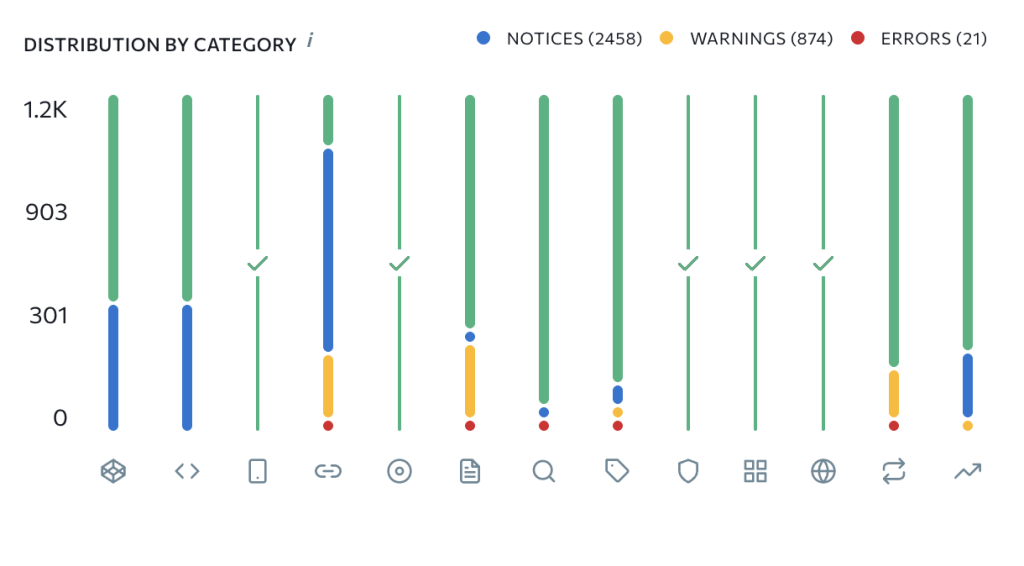
A website‘s foundational strength plays a role in how crawlers, search engines, and users experience the content. This structure can sometimes have cracks which are categorized as errors and warnings. The volume and nature of these issues do have a negative impact on a website’s visibility and conversion rates.
Can Perplexity Perform a Website Audit?
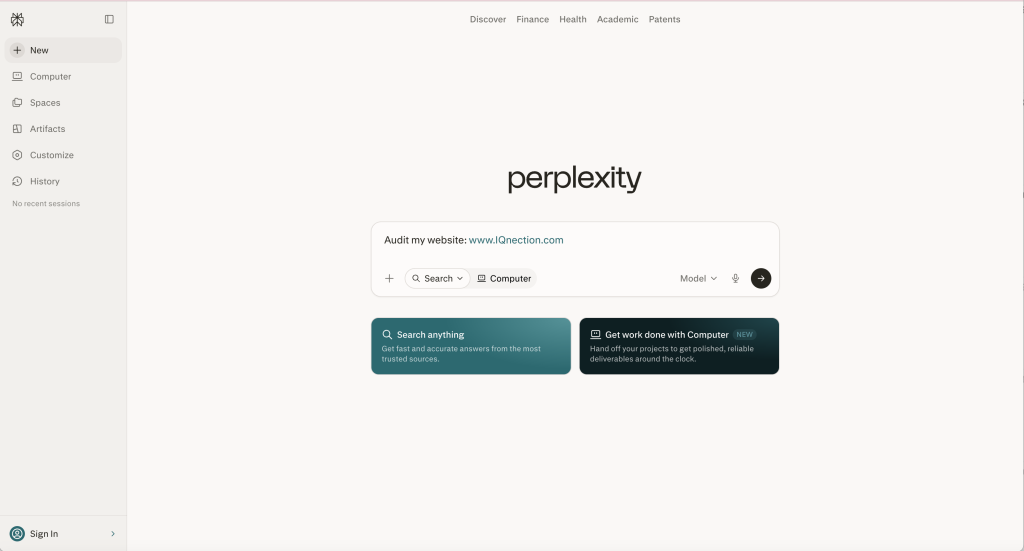
Perplexity is mostly an answer engine and is not capable of being a diagnostic tool. For audits, you can’t be sure if Perplexity is analyzing the live page, a cached copy, snippets from search results, third-party summaries, or a partial view of a page. Perplexity can be useful for a first-pass website review but is not a strong standalone audit tool.
This matters because Perlpexity’s UI gives a feeling of source-backed confidence, even when the synthesis is wrong, or the citation provided does not actually support the claim.
Is a Perplexity Website Audit Accurate?
A study completed by The Columbia Journalism Review compared eight AI engines and found that they all tested poorly when accurately identifying and citing source material. Perplexity performed the best among the tested tools but still returned incorrect answers 37% of the time in the test audit.
The audit results often point to generalizations that may affect multiple sites, instead of analyzing specific results for your website. For website audits, these flags show up as:
- “Your site is missing schema” when schema exists.
- “Your H1s are duplicated” based on a partial crawl or cached page.
- “Your page speed is poor” without running Lighthouse/PageSpeed.
- “Your competitor ranks because of X” without confirming SERP, backlinks, content quality, location, or personalization.
Someone without audit verification tools is unable to authenticate whether or not these results are accurate to their website.
Using Perplexity for a Proper Website Audit
AI tools like Perplexity are useful for brainstorming and surface-level review, but they are not reliable enough to serve as the source of truth for a website audit. They can misread pages, cite sources incorrectly, rely on cached or incomplete information, and make recommendations without validating technical conditions. We use AI as an assistant, but we verify findings with crawl data, Search Console, analytics, PageSpeed, schema validators, and manual review.
A stronger process uses perplexity for hypothesis generation, not final findings. IQnection’s preferred process is:
- Crawl: Using the SE Ranking website audit tools
- Google data: Search Console, GA4, and PageSpeed Insights.
- Manual UX review: messaging, conversion paths, trust signals, mobile experience.
- SERP review: actual search results, local pack, competitors, intent match.
- AI review: ask Perplexity/ChatGPT/Claude for blind-spot checks only after you have real data.
- Human synthesis: separate “verified issue,” “likely opportunity,” and “AI-suggested hypothesis.”